|
|
|||||
|
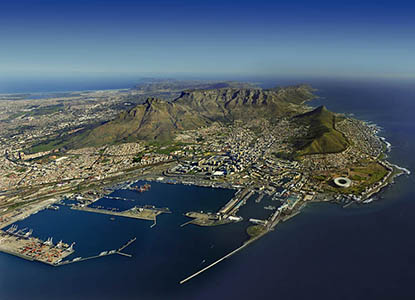
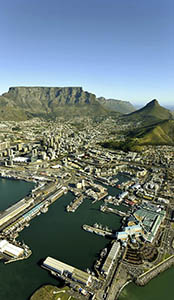
LOOKING BACK… Cape Town has always been a port of strategic importance – since 1653 when the first Dutch settlers set foot here under Jan van Riebeeck, and in the centuries thereafter under Dutch, French and English rule. It has been called “the fairest Cape of them all” by explorers, and also the “Cape of Storms” for those unfortunate enough to have passed here in bad weather conditions. During the 1970s, the containerisation of cargo revolutionised global shipping and the South African maritime sector. Containerised ships could carry more goods and deliver them with great speed while requiring fewer sailors who spend less time ashore. In essence, the technological innovation of containerisation destroyed the socially intensive port culture – based on the slow-moving general cargo temporal regime – that had characterised international ports until that time. When containerisation started transforming the port in the 1970s, overseas companies had already established Cape Town as their base for South African trawling operations, forming a powerful trawling sector alongside the modest container division. Their seamen came to dominate dockside social life due to their large numbers and long stays. Unlike the container ship sailors, who usually enjoyed just one or two nights of shore leave, the trawler men often spent weeks ashore. Eventually, at the time of embarking upon the V & A Waterfront Marina Development, it was amidst a very evolved, very popular sub-culture of prostitution particularly for seamen, which even took place at the very site selected for construction. Since those early days though, the area underwent a complete metamorphosis, and has been completely transformed into what many today describe as the world’s most successful and desirable waterfront development. |
|||||